Best Perlite for Succulents
A suitable perlite soil is the premise for the good growth of potted plants. The succulent plants known as "lazy plants". As long as the perlite soil is prepared, it is only necessary to maintain good light and water 2-3 times a month.
What Is A Succulent Plant?
As the name suggests, succulent refers to those succulent and succulent plants. Professionally speaking, it refers to those plants with hypertrophic vegetative organs whose leaves degenerate in order to store a large amount of water. In horticulture, it is sometimes called fleshy flowers. It is mainly distributed in Crassulaceae, agastachyaceae, Euphorbiaceae, oleandeaceae, Liliaceae, apricotaceae, etc.
What's perlite?
Horticultural Perlite has light weight, strong water absorption and good air permeability. It also has certain adsorption capacity. Horticulture perlite can increase succulent soil fluffy, prevent soil hardening and increase the air permeability of roots. Moreover, it is also a relatively cheap light matrix. Horticulture perlite has always been "inseparable" from peat and coconut bran. Most of the nutrient soils on the market contain a certain proportion of expanded perlite.
Is Perlite Good for Succulents?
To cultivate succulent plants, you can use coarse sand, maifan stone, perlite and vermiculite. You only can use full granular stone alone in the stage of succulent reproduction. Move the plants to perlite soil after long root germination. You should cultivate succulents in combination with perlite and fertile soil in other stages.
The first point to raise succulent plants is to mix soil. The roots of succulent plants are mostly capillary roots. Most of them are like this. So configure the soil with good air permeability as much as possible. The soil with air permeability and water permeability will not accumulate rotten roots. Black rot will not occur when watering.
When we prepare soil, we only need to add more than half of the granular soil. But the particles should not be too large, preferably 3 ~ 6mm. What is granular soil? For example, volcanic rock, iridescent stone, perlite and so on. Cinder is also OK.
Can I Use Perlite for Succulents?
It is not impossible to raise succulents with pure granular soil. Many people use pure hematite soil, pure Maifan stone or pure vermiculite to raise succulents. However, full granular soil not only has high planting cost, but also has adverse reactions. For example, slow growth of succulent plants, long air roots of branches and stems, excessive heat absorption in summer and rapid water evaporation due to too single nutrients.
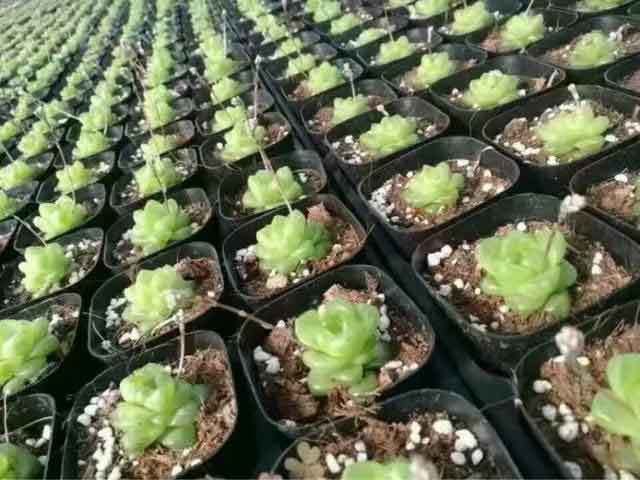
In contrast, succulent soil are more balanced and easier to take care of. Perlite for succulents is a granular stone. It can adjust the soil to be loose, breathable and permeable. More succulents is drought resistant and afraid of soil ponding. Perlite has good air permeability and water permeability. This avoids the situation of ponding and rotten roots in the succulent soil without perlite.
Using perlite alone only when cutting succulent plants, regardless of leaf cutting or stem cutting. Before rooting, succulent plants do not need too much water and nutrients in the soil. Succulent plants rely on the nutrients of their own leaves for their own growth, root germination, and then transplanting.
I not recommended to use 100 percent perlite grow plants. Because perlite has no nutrients for succulents absorption. Over time, succulent plants will lack nutrients and grow slender. Although succulents has little demand for water and fertilizer, some succulents likes granular fertile nutrient soil. They doesn't like the matrix of full granular stone. When raising succulents, you should adding perlite to succulent soil and mix it with fertility soil.
How Much Perlite to Add to Soil for Succulents?
The perlite soil needs to meet the requirements of nutrient balance, good air permeability and drainage. The perlite soil mix for succulents is often more suitable for the good growth of succulent plants than a single substrate. Proportion of succulent soil: Perlite 20% + original soil 30% + river sand 50%.
Most succulent plants are suitable to be mainly composed of peat, coconut bran and perlite, and then add 1-2 other particle matrix. The perlite to soil ratio for succulents can be properly adjusted at about 60%. This accordings to the growth stage of succulent plants and the development degree of roots.
You can use expanded perlite as cutting substrate or soilless culture. But generally not directly use for growing succulents. Although perlite contains certain mineral trace elements, it lacks organic matter. It has strong water absorption, easy to pulverize, and float after watering. So it is generally not used alone.
Using coconut bran, maifan stone, peat moss and perlite for succulents can develop strengths and avoid weaknesses. I suggested the amount added should not exceed 1 / 3 of the total amount of soil.
How to Use Perlite for Succulents?
Succulent plants are drought resistant and afraid of water and soil ponding. Once the soil is ponded, the succulents will rot and rot the roots. Succulent soil mix perlite can adjust the soil to be loose, breathable and permeable. This avoids the phenomenon of soil hardening. The drainage of perlite soil is smooth. The succulents will not rot due to stuffy roots.
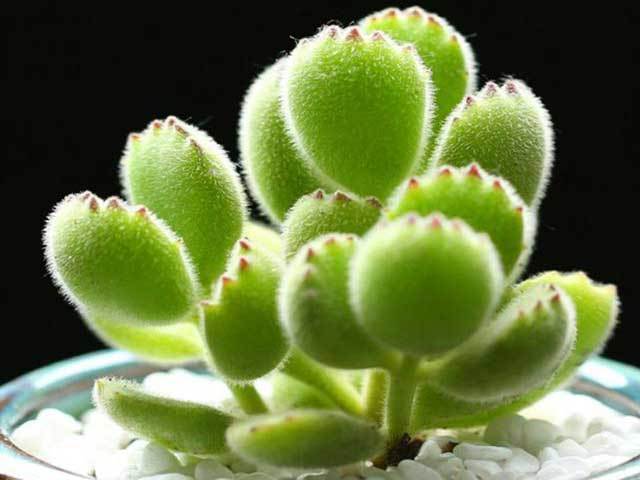
I recommended putting 4 parts of rotten leaf soil and 6 parts of perlite into nutrient soil mixed with an equal yard. Prepare the amount of perlite and humus according to the size of succulent plants. Generally, the amount of humus should not exceed perlite. The amount of perlite is more than humus soil. It will not rot black due to high temperature in midsummer or freeze damage due to low cold temperature in winter. because perlite has good drainage, facilitate soil drying.
You can use perlite for the cultivation of succulents or as a paving stone. When pave a layer of perlite on the surface of the plastic succulent pots, it looks clean and can improve the succulents value. Moreover, the perlite can also help the succulents to prevent tipping and avoid mosquitoes and ants on the pots surface.
Perlite can also be of large particles. When transplanting and changing the pot for succulents, put it at the bottom of the thermoform pot. First pad the hole with window mesh, then fill in granular soil. Planting succulents into the pot. Lay a layer of perlite or rice wheat stone to press the succulents root soil. The perlite makes the pot soil drain smoothly. This avoid the succulents in perlite occurrence of ponding, fleshy and rotten roots.
Comparison Between Perlite and Other Matrix
Peat soil is actually the soil deep under the swamp, which is formed by the accumulation of swamp plants. It is not only rich in nutrition, but also has good air permeability. However, because peat soil is easy to absorb water, it is easy to cause rotten roots if used alone to plant succulent plants. It is best to use it with perlite for succulents.
Vermiculite is the most commonly used soil for growing succulents. It has light texture and strong water retention. Chiyu soil is a product of nature. Its air permeability and drainage are very good. The only disadvantage is that it is easy to powder out after a long time. Coconut bran is the fiber powder of coconut shell, which is the by-product or waste of coconut after processing. It is a pure natural organic matter medium shed from the coconut shell fiber processing process.
The processed coconut bran is very suitable for cultivating succulent plants. It can fully maintain water and nutrients and reduce the loss of water and nutrients. Good air permeability prevent plant root corrosion; The fiber in coconut bran is a good attachment of plant roots and promotes the growth of plant roots. Coconut bran is suitable for soil mixing, seedling raising and leaf cutting.
There are many kinds of succulents and different breeding methods, but they are basically the same. They have many commonalities. They prefer to grow in sunny conditions. They should give enough sunshine in the growing season. Avoid shade and exposure in summer, and more sunshine in winter. Turn the pots 360 degrees to make it receive light evenly.
Perlite for Succulents Tips:
Perlite is easily broken. So change the pot soil once a year after it is used for fleshy cultivation. This prevents the soil from hardening after perlite in soil for succulents is broken. Perlite is a very suitable medium for the maintenance of succulent plants. It is also very beneficial to the growth of succulent plants. However, most perlite contains a lot of powder. Before using, it's best to soak it in water and wash it. Then put the perlite for succulents in a plastic plant pot.
Succulent plants can not use perlite alone, because perlite absorbs water and dries quickly. In the succulent growth period, long-term water shortage and succulents will wither. The plants can not absorb water and lack nutrients. The succulent leaves are thin, not full and thick enough, especially the fleshy seedlings will dry.
Whether succulents in perlite can grow well is also related to the breeding environment and breeding habits. In addition to providing a sunny and well ventilated breeding environment, daily watering should not be too diligent. Otherwise it is also difficult to grow in a good state.
If you want to find oem perlite for succulents factories, please contact Wilson Garden. We are a professional perlite factory in china.
Learn more in our Gardening Knowledge guide.
Related Article:
is peat moss good for succulents