Gallon Pot Size Guide (1–25 Gallons)
What Is a Gallon Pot Size?
A gallon pot refers to the approximate volume a container can hold. It is commonly used in nursery and container gardening. However, actual dimensions can vary depending on the pot type (nursery pots or fabric pots).
Gallon Pot Size Chart (1–25 Gallons)
Below is a quick comparison of the most common plant pot sizes by gallon.
👉 Swipe the table left/right to view all size details.
| Pot Size | Diameter (inches) | Height (inches) | Soil Volume (cu ft) | Best For |
|---|
| 1 Gallon | 6–7″ | 6–7″ | ~0.15 | Seedlings, herbs |
| 1.5 Gallon | 7–8″ | 7–8″ | ~0.2 | Small flowers |
| 2 Gallon | 8–9″ | 8–9″ | ~0.3 | Young plants |
| 3 Gallon | 9–10″ | 9–11″ | ~0.45 | Vegetables |
| 5 Gallon | 11–12″ | 11–13″ | ~0.7 | Tomatoes, peppers |
| 7 Gallon | 13–14″ | 12–14″ | ~1.0 | Larger plants |
| 10 Gallon | 15–16″ | 14–16″ | ~1.5 | Root crops, shrubs |
| 15 Gallon | 16–18″ | 16–18″ | ~2.0 | Small trees |
| 20 Gallon | 18–20″ | 16–20″ | ~2.7 | Fruit trees |
| 25 Gallon | 20–24″ | 18–22″ | ~3.5 | Large plants, trees |
👉 Tip: Always round up soil slightly to account for drainage and settling.
Standard Pot Dimensions May Vary
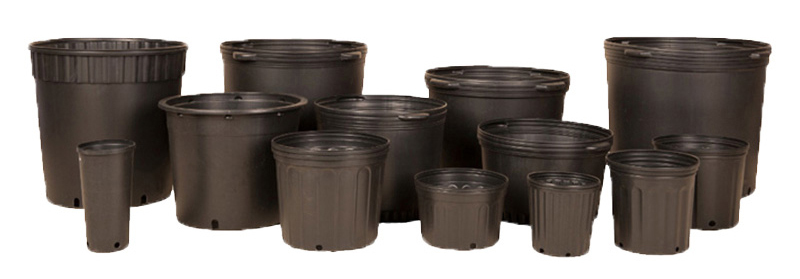
There is no universal standard for gallon pot dimensions.
Actual size can vary based on:
✔️ manufacturer.
✔️ pot shape.
✔️ injection vs blow molding.
✔️ nursery trade standards.
For commercial projects, growers usually verify:
✔️ top diameter.
✔️ bottom diameter.
✔️ height.
✔️ actual soil capacity.
before ordering in bulk.
Explore Pot Sizes by Gallon
Small Pots (Best for Seedlings & Herbs)
✅ 1 Gallon Pot Size Guide.
✅ 1.5 Gallon Pot Size Guide.
✅ 2 Gallon Pot Size Guide.
Medium Pots (Most Common for Vegetables)
✅ 3 Gallon Pot Size Guide.
✅ 5 Gallon Pot Size Guide.
✅ 7 Gallon Pot Size Guide.
Large Pots (For Mature Plants & Trees)
✅ 10 Gallon Pot Size Guide.
✅ 15 Gallon Pot Size Guide.
✅ 20 Gallon Pot Size Guide.
✅ 25 Gallon Pot Size Guide.
How to Choose the Right Pot Size?
Choosing the correct gallon size depends on several factors:
Plant Type
✔️ Herbs & leafy greens → 1–3 gallons.
✔️ Vegetables (tomatoes, peppers) → 5–10 gallons.
✔️ Trees & shrubs → 15–25 gallons.
Root Depth
✔️ Deep-rooted plants require taller containers, not just wider ones..
Growth Cycle
✔️ Short-term crops → smaller pots.
✔️ Long-term plants → larger pots.
Growing Space
✔️ Indoor → compact sizes.
✔️ Outdoor → larger containers for better yield.
Nursery Pot Trade Sizes Explained
In the nursery industry, gallon pot sizes are considered “trade sizes,” not exact liquid measurements.
For example:
✅ A trade 1 gallon nursery pot may hold only 0.7–0.9 true gallons.
✅ A trade 5 gallon pot is often smaller than 5 liquid gallons.
✅ Fabric pots are usually closer to true volume capacity.
Because of this, commercial growers often compare pots using both:
✅ top dimensions.
✅ actual soil volume.
✅ plant spacing requirements.
This is especially important for:
✅ greenhouse production.
✅ wholesale nursery shipping.
✅ automated transplant systems.
Plastic vs Fabric Gallon Pots
Gallon sizes are commonly used for both plastic nursery pots and fabric grow bags. The actual dimensions can vary significantly.
👉 Swipe the table left/right to view all information details.
| Pot Type | Common Shape | Main Advantage |
|---|
| Plastic Gallon Pots | Taller & rigid | Easy transport and retail display |
| Fabric Gallon Pots | Wider & flexible | Better drainage and root aeration |
Pot Size Selection for Commercial Growing
Commercial growers often choose gallon pot sizes based on:
✔️ crop cycle length.
✔️ shipping efficiency.
✔️ greenhouse bench spacing.
✔️ irrigation requirements.
✔️ retail display size.
For example:
✔️ 1–2 gallon pots are common for starter plants.
✔️ 3–5 gallon pots are widely used for retail vegetables and ornamentals.
✔️ 15–25 gallon containers are often used for nursery trees and landscaping plants.
Are Gallon Pot Sizes Exact?
No, gallon sizes are nominal, not exact.
For example:
A “5 gallon pot” may hold slightly less than 5 true gallons.
So gallon nursery pots are often smaller than labeled.
Fabric pots are usually closer to true volume.
👉 Always check dimensions if precision matters.
FAQ
What size pot is best for vegetables?
Most vegetables grow well in 5 to 10 gallon pots. This depends on root size.
What does “gallon” mean in plant pots?
It refers to approximate container volume, not exact liquid measurement.