How to Plant Mums in Pots?
What Are Mums?
Mums are also known as chrysanthemums. They are popular fall-blooming perennial plants. Native to northeastern Europe and Asia, but are naturalized on a global scale. They are generally used for ornamental purposes. But some varieties are used to make chrysanthemum tea.
Mums are an ancient flower, cultivated in China as far back as the 15th. They’ve continued to grow in popularity over the years in current existence. There are many species of mums, hundreds of varieties and thousands of hybrids. Blooms can be as frilly as a cheerleading pompom or as dainty as a daisy.
Mums come in a rich range of colors including white, yellow, orange, lavender, purple, red and bicolor. They attract butterflies in the fall. You can make great cut flowers with flower sleeves, lasting up to two weeks in a bouquet. They’re usually the last plant to bloom before frost. Ushering your garden into the big sleep of winter with a last bang of color.
They can tolerate a variety of poor conditions. They’re easy-to-grow in beds, borders and containers. Heirloom varieties have become very popular in cutting gardens because of the bloom’s long vase life. If you want to learn how to plant chrysanthemums in pots, you should read the information below.
Choose Potted Mums Variety
There are many species of chrysanthemum. Although all the species belong to the aster family, each variety has a unique shape, size, and color. The most popular and coveted variety is grandiflorum.
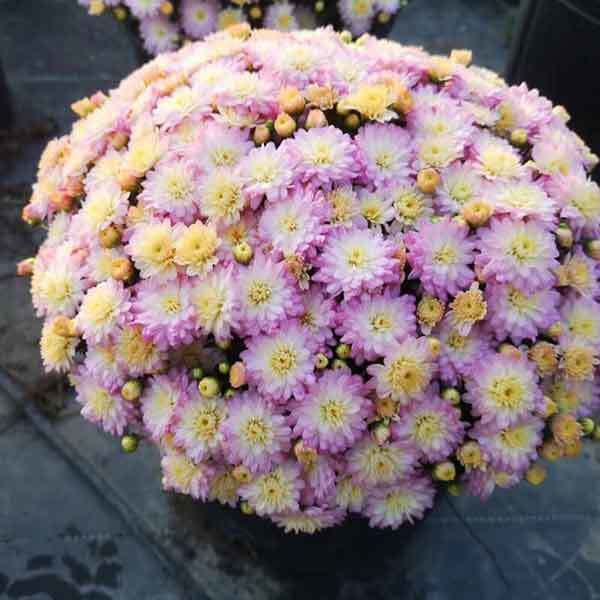
Chrysanthemum is widely used to decorate porches, patios, balconies, and terraces. They are easy to grow and they don’t require much care. Mums are known for their beautiful blooming in the autumn. They will provide you with an extremely pleasant view.
Success starts with choosing the best plant you can. Wherever you shop for mums, avoid buying a wilted plant. Look for ones that have more buds than open flowers. You’ll get more bloom time out of them. These plants will likely survive repotting better.
Best Pots for Mums
What size pot for mums? You should grow mums in deep pots. Preferably, you should ask about the depth of the pot you need for mums at the nursery store. The mums pots also should be well drained, loamy and airy. Once you have a pot with these features, you should fill it with good quality soil.
I recommended adding 1/3 of compost, horticulture perlite, vermiculite and other organic matter into the soil. After planting mums in pots, water thoroughly for the first couple of weeks.
Can I Plant Chrysanthemums from Seed?
Technically yes, you can grow mums from seed. However, the process can take 4 - 5 months and can be very hit or miss when it comes to success. Most of the mums you see at the nurseries are grown from cuttings.
If you are an experienced gardener and enjoy the process of starting seeds in the winter, you should definitely try your hand at growing mums from seed. If you’re a novice or are short on time, stick with buying established plants from a nursery.
Where Should I Plant My Mums?
One of the most important growing conditions of mums is full access to sunlight. Chrysanthemum requires a direct exposure to sunlight daily. Thus, you should place mums in a spot where your fall flower can get the amount of sunlight it needs daily.
Chrysanthemum plants will look spindly and generally produce few, small flowers without enough light. However, protect your plants from harsh afternoon sun if your daytime temperatures are still getting up into the 80s and beyond. Sun shade net helps the flowers last longer.
Mums grow best in full sun. Choose a spot with at least 6 hours of sun a day. This helps the plant maintain its energy during the blooming cycle as well as produce new buds. It is important if you want to see color up until the first hard frost.
When to Plant Mums in Containers?
Even though mums are late summer, early fall blooming plants, it’s best to plant them in the springtime. It’s easy to get caught up in the last-minute fall mum-buying craze. But if you want mums to be a perennial fixture in your garden, they need to establish their roots before the cold of winter sets in.
Planting potted mums in the fall doesn’t give them enough time to root down in their new spots. They may struggle to adapt to cold temperatures. If you’re only in it for the fall decor, it’s not going to matter. But if you want to make a solid investment in these beautiful easy to grow perennials, plant them in the spring.
Repotting Mums in Containers
Always repot a purchased potted mum plant when you get it home. They are usually root-bound. The roots are taking up the majority of the small plastic flower pots. Gently remove the mum from the plastic nursery pot. Spread out the root ball and place the plant in the new pot. Maintain the depth of soil that the plant was originally grown in.
Allow an inch at the top of the container to hold water until it can soak into the soil. Replant them in large plastic planters with potting soil for mums. Make sure the roots have room to spread out and breathe. Gently loosen tangled roots before repotting to encourage them to grow outward again.
Watering Mums in Pots
Mums do best in well-drained soil. So use the best potting soil for mums in your container. Whether you repot it or not, your chrysanthemum is going to want a lot of water. Since its root ball is probably very tight. Set your decorative plastic planters in a dish of water for a few hours rather than watering from above. This gives the roots a better chance of soaking up the water. Make sure to take it out of the dish after a few hours, though, or the plant could drown.
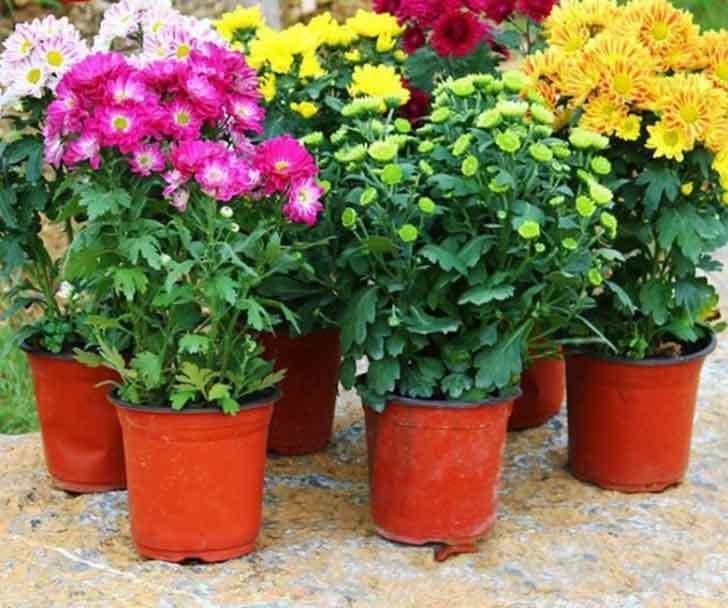
From then on, you can water from above every day or so. Mums require regular watering because of their shallow root system. They don’t tolerate drought and they can dry out really quickly. However, you need to water them carefully. Overwatering is harmful to them.
Water your newly potted mums thoroughly, and never let them wilt. After they are established, water your mums whenever the soil feels dry. If the bottom leaves look limp or start to turn brown, water more often. Avoid soaking the foliage, which encourages leaf diseases.
Fertilizing Mums in Planters
Mums are not heavy feeders. But they require fertilization once in a while to promote the growth of healthy roots, bud development, and a vigorous plant. I recommended applying 12-6-6 slow release fertilizer when your plant starts growing.
How to keep potted mums over winter?
If you live in a colder climate, add up to 4 inches of straw or shredded hardwood mulch on top of the soil. Then, fill in around the entire plant and spread well between branches. Cover the thermoformed pots with burlap or an old sheet.
Many times, it isn't necessarily the cold weather itself that kills mums, but the ice that forms around the roots if the mums are sitting in water. Soil that drains properly is key to successfully overwintering mums. You should choose a location that is somewhat sheltered from strong, cold winter winds.
Before freezing weather occurs, give the mums a little liquid fertilizer. Higher in phosphorus stimulates root growth. Then, once the first hard frost hits, move your plants inside or into an unheated garage until spring.
Some growers who live in the extremely cold areas of the country dig up their mums every winter. Keep them in a cool, damp place until the last frost of winter. Pinch off dead blooms to clean up the plant if you want, but leave branches intact. Mums have a better chance of surviving if you wait until spring to prune old stems.
As soon as the weather warms up again in spring, pull away mulch to allow new shoots to pop up. Move your polypropylene plant pots outside into the sunshine. You might be pleasantly surprised to find your mum has overwintered beautifully. Proper overwintering will ensure that your plants come back year after year.
Pests and Diseases
A lot of pests can impose a threat to your plants. For example, leaf and stem miners, chrysanthemum eelworm, aphids, caterpillars and worms. Mums are susceptible to the usual array of bugs: caterpillars, leafhoppers, leaf miners and spider mites. The most dangerous diseases are gray mold, powdery mildew, and root rot. Chrysanthemums can get leaf spots, powdery mildew and viruses like mosaic or stunt.
The best treatment is prevention. Don’t crowd chrysanthemums or plant them in shade. The moisture will remain on their leaves and create a breeding ground for disease. Give them plenty of air and sun. Rabbits and deer usually don’t eat mums’ fuzzy, fragrant leaves and blooms. They much prefer your blueberry bushes.
Learn more in our Growing Plants in Pots guide.
Related Article:
white mums turning purple