What to Grow in 30–100 Gallon Grow Bags?
Introduction
30–100 gallon fabric grow bags offer ample space for plants. They are ideal for large vegetables, berry bushes, climbing crops, or even dwarf fruit trees. This guide explains what plants thrive in 30–100 gallon grow bags.
Why Choose 30–100 Gallon Grow Bags?
✔️ Excellent drainage and aeration.
✔️ Large root zone for healthier plants.
✔️ Better temperature regulation.
✔️ Suitable for patios, greenhouses, and backyards.
✔️ Easier setup than wooden raised beds.
✔️ Reusable and foldable after use.
30–100 gallon fabric pots are also widely used for fruit trees, shrubs, seasonal vegetables, and container farming systems.
They optimize root health while reducing transplant stress. Ideal for commercial growers, nurseries, and greenhouse operations.
What Can You Grow in 30–100 Gallon Grow Bags?
Large Vegetables
These plants need deep soil and room to spread roots.
✅ Indeterminate tomatoes.
✅ Bell peppers.
✅ Jalapeño peppers.
✅ Eggplants.
✅ Cucumbers.
✅ Zucchini.
✅ Summer squash.
✅ Winter squash.
A 30–65 gallon grow bag is usually sufficient for most large vegetable crops.
Using tomato cages or trellises helps improve airflow and supports heavier harvests.
Root Crops
Root vegetables thrive in deep, loose soil found in large bags.
✅ Potatoes (30–65 gallon for tower-style planting).
✅ Sweet potatoes.
✅ Ginger.
✅ Turmeric.
Vining Crops
Vining plants require significant growing space and benefit from large soil volumes.
✅ Melons (small varieties like cantaloupe).
✅ Pumpkins (small to medium types).
Trellises and vertical supports help save space. They also improve airflow and reduce disease pressure.
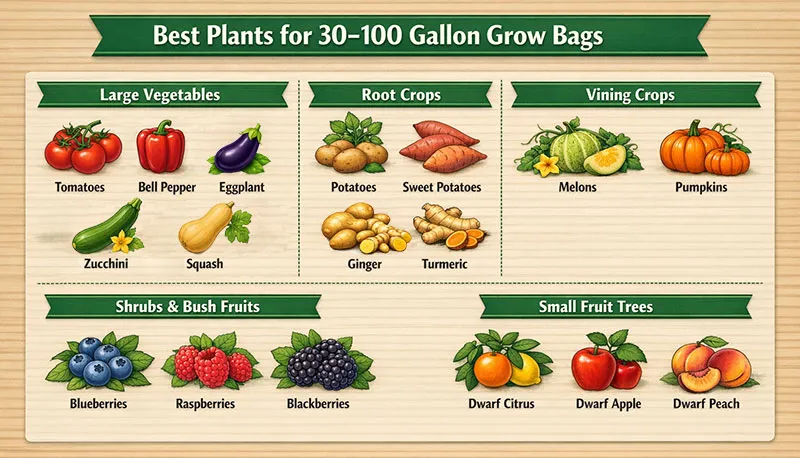
Berry Shrubs & Bush Fruits
Many berry-producing shrubs adapt very well to large fabric containers.
✅ Blueberries.
✅ Raspberries.
✅ Blackberries.
These crops are ideal for patios and container orchards where in-ground planting is not possible.
Dwarf Fruit Trees
Large fabric pots are ideal for dwarf fruit trees. They help manage root growth and improve aeration.
✅ Dwarf citrus (lemon, lime, orange).
✅ Dwarf apple.
✅ Dwarf peach.
✅ Fig trees.
A 100 gallon grow bag is typically the minimum recommended size for long-term fruit tree growth.
Recommended Products
30 Gallon Grow Bags
45 Gallon Grow Bags
65 Gallon Grow Bags
100 Gallon Grow Bags
Best Plants for 30–100 Gallon Grow Bags
Choosing the correct grow bag size is important. Overcrowding reduces airflow, root development, and yields.
👉 Swipe the table left/right to view all plant details.
| Plant Category | Recommended Crops |
|---|
| Large Vegetables | Tomatoes, peppers, eggplants |
| Root Crops | Potatoes, sweet potatoes, ginger |
| Vining Crops | Melons, pumpkins, squash |
| Berry Shrubs | Blueberries, raspberries |
| Fruit Trees | Dwarf citrus, apple, peach |
|
30 vs 45 vs 65 vs 100 Gallon Grow Bags
👉 Swipe the table left/right to view all size details.
| Grow Bag Size | Best Use | Typical Plants |
|---|
| 30 Gallon | Single large crops | Tomato, eggplant, potato |
| 45 Gallon | Multiple medium crops | Tomato, pepper, citrus |
| 65 Gallon | Vining crops or shrubs | Melon, blueberry, squash |
| 100 Gallon | Mini raised bed systems | Mixed vegetables, fruit trees |
|
Larger grow bags also help stabilize soil moisture and reduce temperature fluctuations during hot weather.
Planting Tips for Large Grow Bags
Soil Requirements
👉 Swipe the table left/right to view all size details.
| Grow Bag Size | Soil Volume |
|---|
| 30 Gallon | ~4 cubic feet |
| 45 Gallon | ~6 cubic feet |
| 65 Gallon | ~8–9 cubic feet |
| 100 Gallon | ~13–14 cubic feet |
|
✔️ Mix compost and organic matter for nutrient density.
✔️ Refresh soil each season to prevent compaction.
Water Management
✔️ Water large bags (30–100 gallons) about once per week to every few days.
✔️ Large grow bags retain moisture longer. Water deeply but less frequently.
✔️ Consider drip irrigation for consistent hydration.
Tips for Better Yields
✔️ Use cages, stakes, or trellises for support.
✔️ Rotate crops each season.
✔️ Apply slow-release fertilizer.
✔️ Prune excess foliage for better airflow.
✔️ Mulch soil surfaces to reduce evaporation.
Proper spacing is especially important for tomatoes, melons, and squash.
Conclusion
So, what can you grow in 30–100 gallon grow bags? The best options include tomatoes, peppers, potatoes, melons, pumpkins, berry shrubs, and dwarf fruit trees. With proper care, these large grow bags can support impressive yields in patios, backyards, greenhouses, and urban gardens.
FAQ
What to grow in 30 gallon grow bags?
A 30 gallon grow bag is ideal for medium‑sized vegetables, compact fruiting shrubs, and vining crops.
How much soil for a 30 gallon grow bag?
A 30-gallon grow bag typically requires about 4 cubic feet (113 liters) of soil.
How much soil for a 100 gallon grow bag?
A 100‑gallon grow bag usually needs 13–14 cubic feet (370–400 liters) of soil.
How many tomato plants fit in a 100-gallon grow bag?
Four to six plants, depending on variety and spacing.
Can I grow pumpkins in a 65-gallon grow bag?
Yes. Choose small or medium varieties for best results.
Are large grow bags too heavy to move?
Yes, they’re heavy when filled with soil. Place them where you want them before filling.
Check What Can You Grow in Grow Bags for a complete crop list across all grow bag capacities.
Related Guides:
What to Grow in 25 Gallon Grow Bags
What to Grow in 150–400 Gallon Grow Bags