What to Grow in 25 Gallon Grow Bags?
Introduction
25 gallon grow bags are large enough to support heavy-feeding vegetables, root crops, vining plants, and compact fruiting shrubs. They provide a strong balance between root capacity, moisture stability, and space efficiency.
25 gallon fabric pots are widely used by home gardeners and commercial growers. Ideal for patios, backyards, greenhouses, and productive container gardens. In this guide, you’ll learn what to plant in 25 gallon grow bags.
Why Choose 25 Gallon Grow Bags?
✔️ Supports deep-rooted vegetables and vining crops.
✔️ Better moisture retention than smaller grow bags.
✔️ Excellent drainage and airflow for healthier roots.
✔️ Reduces root circling through air pruning.
✔️ Suitable for patios, greenhouses, backyard gardens, and intensive container growing.
✔️ Reusable for multiple growing seasons.
25 gallon fabric pots provide enough root space for larger crops. They are easier to manage than oversized raised beds or permanent containers.
What Can You Grow in 25 Gallon Grow Bags?
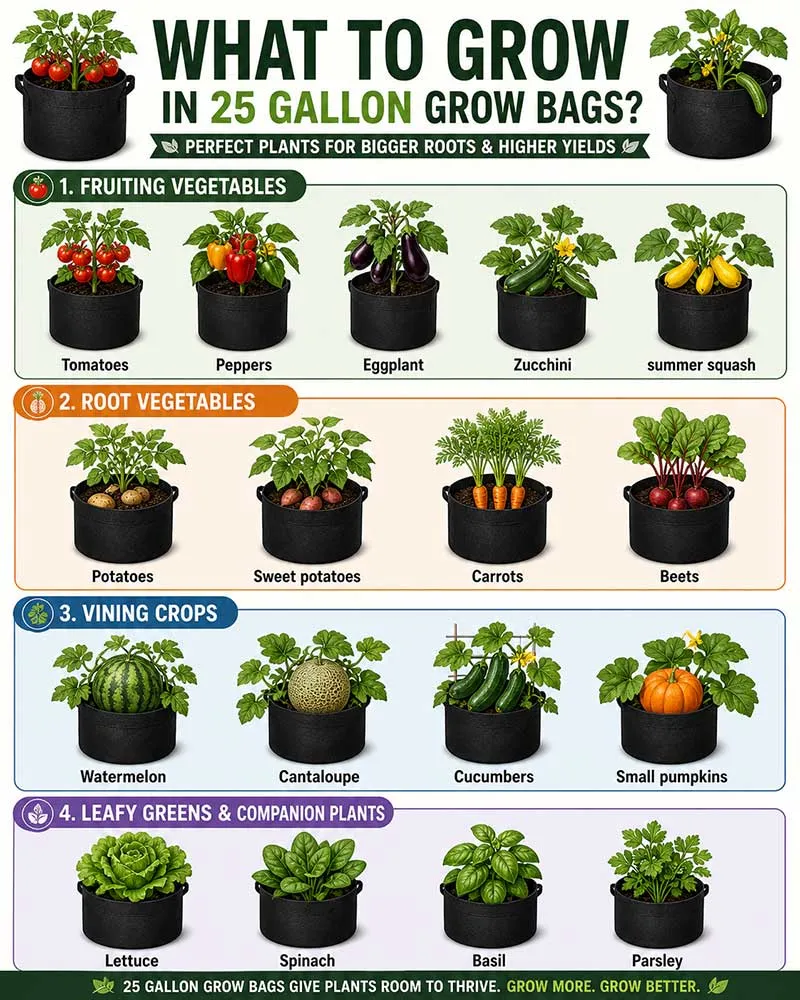
A 25 gallon grow bag supports medium to large crops with deeper root systems. Here are the best categories:
Fruiting Vegetables (Top Performers)
These crops thrive because the soil volume supports flowering and fruit production.
✅ Tomatoes (indeterminate & determinate).
✅ Peppers (bell, chili).
✅ Eggplant.
✅ Zucchini.
✅ Summer squash.
25 gallons provides ample root space and nutrients for consistent fruiting.
25 gallon grow bags are commonly used for:
✔️ Patio vegetable gardens.
✔️ Greenhouse growing systems.
✔️ Raised-bed alternatives.
✔️ Intensive container production.
Recommended Planting Density:
✔️ Tomatoes: 1–2 plants per bag.
✔️ Peppers: 2–3 plants per bag.
✔️ Eggplant: 1–2 plants per bag.
✔️ Zucchini: 1 plant per bag.
✔️ Summer squash: 1 plant per bag.
Growing Tips:
✅ Use cages or stakes for tomatoes and peppers.
✅ Place bags in full sunlight for best fruit production.
✅ Feed regularly during flowering and fruiting stages.
✅ Avoid overcrowding to improve airflow and reduce disease pressure.
Root Vegetables (High Yield per Bag)
✅ Potatoes.
✅ Sweet potatoes.
✅ Carrots.
✅ Beets.
Fabric grow bags prevent soil compaction, improving root shape and yield.
Recommended Planting Density:
✔️ Potatoes: 4–6 seed potatoes per bag.
✔️ Sweet potatoes: 2–3 slips per bag.
✔️ Carrots: 35–45 plants per bag.
✔️ Beets: 10–12 plants per bag.
Growing Tips:
✅ Use loose potting mix for straight root development.
✅ Hill potatoes gradually during growth.
✅ Keep soil consistently moist during tuber formation.
✅ Avoid compacted or heavy garden soil.
Vining Crops (Space-Efficient with Support)
These need vertical support or space to sprawl.
✅ Watermelon.
✅ Cantaloupe.
✅ Cucumbers.
✅ Small pumpkins.
Use a trellis to save space and improve airflow.
Growing Tips:
✔️ Vertical growing improves airflow and fruit quality.
✔️ Support heavy fruits with slings or netting.
✔️ Mulch soil to reduce evaporation during hot weather.
Leafy Greens & Companion Plants
Leafy greens and herbs work well as companion plants around larger crops.
✅ Lettuce.
✅ Spinach.
✅ Basil.
✅ Parsley.
✅ Cilantro.
Ideal for intercropping with tomatoes or peppers.
Companion Planting Benefits:
✔️ Better space efficiency.
✔️ Reduce soil exposure and moisture loss.
✔️ Easier harvesting.
✔️ Increase productivity per container.
How Many Watermelon in a 25 Gallon Grow Bag?
Recommended: 1 plant per bag.
✅ Watermelons are heavy feeders with aggressive roots.
✅ One plant can spread several feet.
Tip: Choose compact varieties and train vertically.
How Many Potatoes in a 25 Gallon Grow Bag?
Recommended: 4–6 seed potatoes per bag.
✅ Space evenly for proper tuber development.
✅ Hill soil as plants grow.
Expect high yield per bag if properly fertilized.
How Many Tomato Plants in a 25 Gallon Grow Bag?
Recommended:
✅ 1–2 plants (ideal).
✅ 2 plants only if well-fed and pruned.
Indeterminate varieties need staking or cages.
Pro Planting Layout (Maximize One Bag)
To increase ROI per grow bag:
✔️ Center: 1 tomato or 1 watermelon.
✔️ Edges: 2–4 herbs (basil, parsley).
✔️ Optional: shallow-root greens (lettuce).
This creates a multi-layer planting system without overcrowding.
Soil, Watering & Fertilizing Tips
How Much Soil for a 25 Gallon Grow Bag?
✅ A 25 gallon grow bag needs about 3.5 cubic feet of soil.
✅ Use well-draining mix (coco coir + compost + perlite).
Watering Tips
Large grow bags dry more slowly than smaller containers. But they still require regular moisture monitoring.
✅ Water deeply about 1–2 times per week depending on weather conditions.
✅ Check soil moisture during hot summer periods.
✅ Add mulch to reduce evaporation and stabilize soil temperature.
Drip irrigation systems can improve watering consistency for greenhouse and multi-container setups.
Fertilizing Tips
Heavy-feeding crops in fabric pots require regular nutrition throughout the season.
✅ Add slow-release fertilizer at planting time.
✅ Feed weekly during peak fruiting stages.
✅ Supplement with compost during mid-season growth.
✅ Flush soil occasionally with plain water to reduce salt buildup.
Common Mistakes to Avoid
✔️ Overcrowding plants: Too many plants reduce airflow, root space, fruit size and overall yield.
✔️ Using garden soil: Dense soil reduces drainage, root aeration and root development.
✔️ Skipping support for vining crops: Trellises, stakes and cages can improve airflow and support heavy fruit.
✔️ Under-fertilizing heavy feeders: Regular feeding helps maintain healthy foliage, strong flowering and higher yields.
Conclusion
If you’re wondering what to grow in 25 gallon grow bags, the answer is simple. They are perfect for large fruiting vegetables, root crops, compact fruit bushes, and multi-plant herb/greens setups. A 25 gallon grow bag can deliver high yield in limited space.
Check What Can You Grow in Grow Bags for a complete crop list across all grow bag capacities.
Related Guides:
What to Grow in 20 Gallon Grow Bags
What Can You Grow in 30–100 Gallon Grow Bags