What to Grow in 15 Gallon Grow Bags: Best Crops Guide
Introduction
A 15 gallon grow bag is one of the most versatile container sizes for growing vegetables, herbs, and small fruit crops. Ideal for both home gardeners and commercial growers. This guide explains the best crops to grow in 15 gallon grow bags, recommended planting densities, and answers key questions.
Why 15 Gallon Grow Bags Work So Well
✅ Deep root zone for vegetables and root crops.
✅ Excellent drainage helps prevent root rot.
✅ Air pruning supports healthier root systems.
✅ Easy to move before filling.
✅ Suitable for patios, greenhouses, nurseries, and backyard gardens.
✅ Reusable for multiple growing seasons.
What Can You Grow in 15 Gallon Grow Bags
15 gallon fabric pots are large enough to support many vegetables, herbs, root crops, and compact fruit plants.
Fruiting Vegetables (Top Performers)
15 gallon fabric pots provide excellent root space and moisture balance for fruiting crops.
✅ Tomatoes (indeterminate or determinate).
✅ Bell peppers.
✅ Chili peppers.
✅ Jalapeños.
✅ Eggplant.
✅ Bush cucumbers.
✅ Compact zucchini varieties.
Air pruning encourages dense, healthy root systems. These crops perform especially well in fabric pots.
15 gallon grow bags are commonly used for:
✔️ Patio vegetable gardens.
✔️ Greenhouse tomato production.
✔️ Raised-bed alternatives.
✔️ Intensive container growing.
Recommended Planting Density:
✅ Tomatoes: 1 plant per bag.
✅ Eggplant: 1 plant per bag.
✅ Zucchini: 1 plant per bag.
✅ Peppers: 2 plants per bag.
✅ Bush cucumbers: 2 plants per bag.
Growing Tips:
✔️ Use tomato cages or stakes for vertical support.
✔️ Place bags in full sun for maximum fruit production.
✔️ Remove lower leaves to improve airflow and reduce disease risk.
✔️ Feed regularly during flowering and fruiting stages.
Root Vegetables
The depth of a 15-gallon grow bag supports full root development.
✅ Potatoes.
✅ Carrots.
✅ Beets.
✅ Radishes.
✅ Turnips.
Fabric grow bags are especially popular for potatoes. They improve drainage and make harvesting easier.
Recommended Planting Density:
✔️ Potatoes: 3–4 seed potatoes.
✔️ Carrots: 25–35 per bag.
✔️ Beets: 8–10 per bag.
✔️ Radishes: 20–25 per bag.
Growing Tips:
✅ Use loose, stone-free potting soil for straight root development.
✅ Keep soil evenly moist during root formation.
✅ Hill potatoes gradually as plants grow.
✅ Avoid overcrowding to improve root size and airflow.
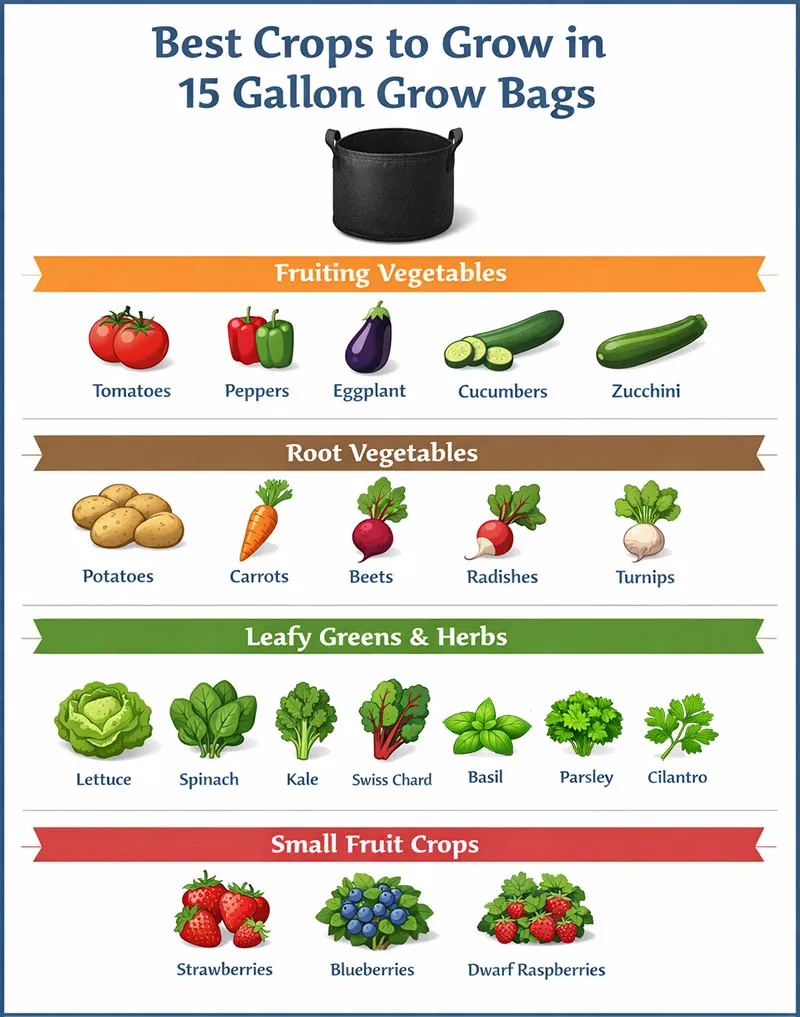
Leafy Greens & Herbs
Large soil volume helps maintain cool, moist conditions.
✅ Lettuce.
✅ Spinach.
✅ Kale.
✅ Swiss chard.
✅ Basil.
✅ Parsley.
✅ Cilantro.
✅ Mint (best grown alone due to spreading).
Recommended Planting Density
✔️ Leafy greens: 6–8 plants per bag.
✔️ Herbs: 3–4 plants per bag.
✔️ Mint: 1 plant per bag.
Growing Tips:
✅ Harvest outer leaves regularly for continuous production.
✅ Use partial afternoon shade in hot climates.
✅ Apply mulch to reduce evaporation.
✅ Succession plant leafy greens for longer harvest periods.
Small Fruit Crops
15 gallon fabric grow bags are also suitable for compact fruiting plants and dwarf berry varieties.
✅ Strawberries.
✅ Compact blueberry bushes.
✅ Dwarf raspberries.
These crops are commonly grown in patio gardens, greenhouse systems, and nursery container production.
Recommended Planting Density
✔️ Strawberries: 10–12 plants per bag.
✔️ Blueberries: 1 compact bush per bag.
✔️ Dwarf raspberries: 1 plant per bag.
Potato Planting Guide for 15 Gallon Grow Bags
How Many Seed Potatoes per 15 Gallon Grow Bag?
The ideal number is 3–4 seed potatoes per 15‑gallon grow bag.
This spacing ensures proper airflow, tuber expansion, and high yields.
How Many Potatoes in a 15 Gallon Grow Bag?
Yield depends on variety and care, but typical results are:
✅ 10–25 potatoes per bag.
✅ Approximately 5–10 lbs of potatoes.
Higher yields come from early hilling, consistent watering, and full sun.
Recommended Planting Layout (Quick Reference)
👉 Swipe the table left/right to view all plant details.
| Crop Type | Plants per 15 Gallon Grow Bag |
|---|
| Tomatoes | 1 |
| Peppers | 2 |
| Eggplant | 1 |
| Zucchini | 1 |
| Bush Cucumbers | 2 |
| Potatoes | 3–4 seed potatoes |
| Carrots | 25–35 |
| Beets | 8–10 |
| Radishes | 20–25 |
| Leafy Greens | 6–8 |
| Herbs | 3–4 |
| Strawberries | 10–12 |
| Blueberries | 1 compact bush |
|
Soil, Watering & Fertilizing Tips
How Much Soil for a 15 Gallon Grow Bag?
✅ A 15 gallon grow bag needs about 2 cubic feet of potting soil.
✅ Use a well-draining, nutrient-rich mix to balance moisture retention and aeration.
✅ 60% high quality potting soil, 30% compost or aged manure, 10% perlite or coco coir for airflow.
Watering Tips
15-gallon grow bags dry faster than rigid containers, especially during hot weather or greenhouse growing conditions.
✅ Check moisture daily during summer.
✅ Water deeply and evenly.
✅ Avoid letting the soil dry out completely.
✅ Add mulch to reduce evaporation and stabilize soil temperature.
Drip irrigation systems can help maintain consistent moisture for larger container gardens and greenhouse setups.
Fertilizing Tips
These fabric pots drain well. Nutrients can leach out more quickly than in-ground beds.
✅ Feed plants regularly throughout the growing season.
✅ Use balanced organic or water-soluble fertilizers.
✅ Flush soil occasionally with plain water to reduce salt buildup.
✅ Heavy-feeding crops benefit from additional compost during mid-season growth. For example, tomatoes and potatoes.
Conclusion
What to plant in 15 gallon grow bags? They are suitable for fruiting vegetables, root crops, leafy greens, herbs, and even small fruit shrubs. With proper care, you can maximize productivity and maintain healthy plants all season long.
For a complete overview of all grow bag sizes, check:
What Can You Grow in Grow Bags
Related Guides:
What to Grow in 10 Gallon Grow Bags
What Can You Grow in 20 Gallon Grow Bags